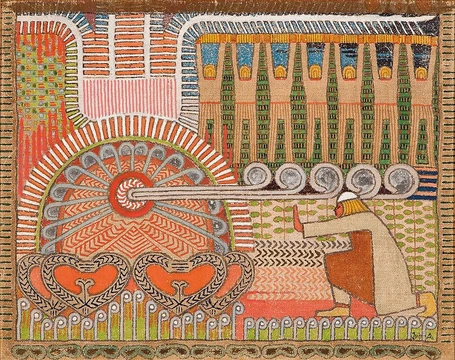
Daphnis
Sicilian cowherd and inventor of pastoral poetry.

Wikipedia / Wikimedia Commons
Daphnis is a figure from Greek mythology, a legendary Sicilian cowherd credited as the inventor of pastoral poetry. According to Diodorus the Sicilian, he was born in the Heraean Mountains of central Sicily. His father was Hermes and his mother a nymph, though Daphnis himself was mortal.
- born
- Heraean Mountains, central Sicily
- died
- Fell from a cliff, changed into stone, or taken to heaven
- field
- Pastoral poetry, mythology
- nationality
- Sicilian (Greek mythology)
- known_for
- Inventor of pastoral poetry; lover of nymphs and Pan; subject of Theocritus's Idylls
Lore & Background
According to tradition, Daphnis was the son of Hermes and a nymph, but was mortal. As an infant, his mother exposed him under a laurel tree, where herdsmen found him and named him after the tree (Greek daphnē). Cows that tended him were said to be sisters to those owned by Helios. In some versions, he was Hermes' eromenos rather than his son. He was sometimes taught panpipes by Pan, and the two became lovers.
Daphnis became a follower of Artemis, accompanying her in hunting and entertaining her with pastoral songs and panpipes. A naiad (possibly Echenais or Nomia) loved him and prophesied he would be blinded if he loved another. He was seduced by a king's daughter with wine, and the nymph blinded him or turned him to stone. He tried to console himself with music, then died—falling from a cliff, being changed into rock, or taken to heaven by Hermes, who caused a spring to gush from the spot. Sicilians later offered sacrifices at this spring.
A later form of the legend identifies Daphnis with a Phrygian hero and makes him teacher of Marsyas. The story of his early death is compared to those of Hyacinthus, Narcissus, Linus, and Adonis—beautiful youths cut off in their prime, symbolizing spring vegetation's growth and withering.
Reader's Guide
Daphnis holds a significant place in Greek mythology as the legendary inventor of pastoral poetry, a genre that idealized rural life and shepherds. His story appears in multiple ancient sources, including Diodorus Siculus, Theocritus, Virgil, and Pausanias, each offering variations. Theocritus's first Idyll describes his death, while Virgil's Fifth and Tenth Eclogues adapt his story, lamenting his death and celebrating his apotheosis. The myth's core themes—love, betrayal, blindness, and early death—resonate with other vegetation deities like Adonis and Hyacinthus. Daphnis's connection to Hermes, Pan, and Artemis underscores his role as a liminal figure between gods, mortals, and nature. The spring that gushed from his death site became a cult focus for Sicilian expiatory offerings. His legacy endures as a archetype of the doomed pastoral poet, influencing later literature and art. The article also notes a separate mountain nymph named Daphnis, mentioned by Pausanias as an early prophetess of Apollo's oracle at Delphi, though this figure is distinct from the cowherd.
Did You Know?
- Daphnis was named after the laurel tree (Greek daphnē) under which he was found as an infant.
- He was said to have been taught to play the panpipes by the god Pan, and the two became lovers.
- A naiad prophesied that Daphnis would be blinded if he loved another woman; after he was seduced by a king's daughter, the nymph blinded him or turned him to stone.
- Sicilians offered sacrifices at a spring that gushed from the spot where Hermes carried Daphnis to heaven.
Frequently Asked Questions
Who is Daphnis?
Daphnis is a legendary cowherd from Sicilian Greek mythology, born in the Heraean Mountains of central Sicily. He is best remembered as the mythic inventor of pastoral poetry.
Who are Daphnis's parents?
His father was the god Hermes and his mother a nymph, though Daphnis himself was mortal rather than a deity.
What is Daphnis known for?
He is credited as the originator of pastoral poetry and also appears as a romantic figure in Theocritus's Idylls, where he is desired by both nymphs and Pan.
How does Daphnis's story end?
There is no single canonical ending: some traditions say he fell from a cliff, others that he was turned to stone, and still others that he was taken up to the heavens.
Why is Daphnis important to mythology?
He provides a mythological origin for the pastoral poetry tradition, giving the genre a divine-Sicilian founder and establishing the archetypal shepherd-poet figure in Greek literature.
More in Mythological hunters 1-24
Spotted an error? Know more?
This is a living reference — every entry is fact-audited, and reader corrections feed straight into our audit queue. Suggest an edit · See this site's audit record