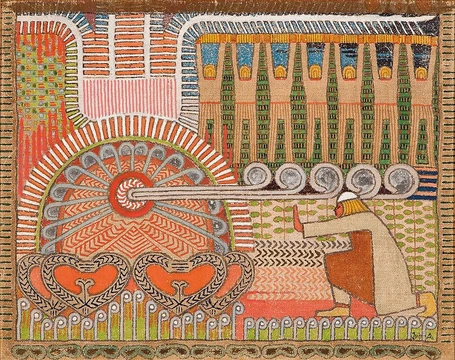
Arganthone
Huntress of Kios and tragic lover of Rhesus.

Wikipedia / Wikimedia Commons
Arganthone is a figure from Greek mythology, known as a huntress from Kios and the lover of Rhesus. Her story is recorded by Parthenius of Nicaea and highlights themes of love, deception, and tragic devotion.
- mythological_origin
- Greek
- known_for
- Huntress, lover of Rhesus
- associated_place
- Kios, Mysia
- recorded_by
- Parthenius of Nicaea
- named_after
- A mountain in Mysia
Lore & Background
Arganthone was a huntress from Kios who preferred outdoor life and hunting alone with her pack of hounds. Rhesus, hearing of her beauty, came to Kios and invited her to hunt together, claiming he too disliked the company of men. She believed him and they grew close, eventually falling in love and marrying.
Reader's Guide
Arganthone's significance lies in her role as a devoted lover and tragic figure in Greek mythology. After Rhesus was killed soon after joining the Trojan War, she grieved by wandering the place where they first became lovers, calling his name until she starved to death. A mountain in Mysia was named after her, as reported by Stephanus of Byzantium.
Did You Know?
- Arganthone was a huntress who hunted completely alone except for her pack of hounds.
- She fell in love with Rhesus after he deceived her by claiming he also hated the company of men.
- Rhesus was killed almost immediately upon arriving at Troy.
- A mountain in Mysia was named after Arganthone.
Frequently Asked Questions
Who is Arganthone?
Arganthone is a Greek mythological huntress from the island of Kios who became the lover of Rhesus. Her story is preserved in the writings of Parthenius of Nicaea, where she appears in a narrative centered on love, deception, and tragic devotion.
What role does Arganthone play in Greek myth?
She functions as a minor but emotionally central figure rather than a major deity, embodying the themes of passionate love and its painful consequences. As a huntress, she occupies the archetypal role of a skilled, independent woman whose fate is ultimately shaped by the men around her.
How does Arganthone's story end?
Her tale concludes in tragedy, as her deep devotion to Rhesus is undermined by deception, leading to a devastating outcome. The ending reinforces the Greek mythological motif that intense love, when entangled with betrayal, carries a heavy personal cost.
Where does Arganthone come from and what is her name's origin?
She is tied to Kios in the region of Mysia, and her name is said to derive from a mountain in that same area. This local geographic root distinguishes her from pan-Hellenic figures and anchors her in a specific regional storytelling tradition.
Why is Arganthone worth noting among mythological hunters?
Unlike Artemis or the Calydonian boar hunters, Arganthone survives primarily through a single literary source—Parthenius of Nicaea—making her a rarer, more intimate entry in the hunter canon. Her significance lies in how a small, personal love story is elevated to mythic weight through the lens of hunting and devotion.
More in Mythological hunters 1-24
Spotted an error? Know more?
This is a living reference — every entry is fact-audited, and reader corrections feed straight into our audit queue. Suggest an edit · See this site's audit record