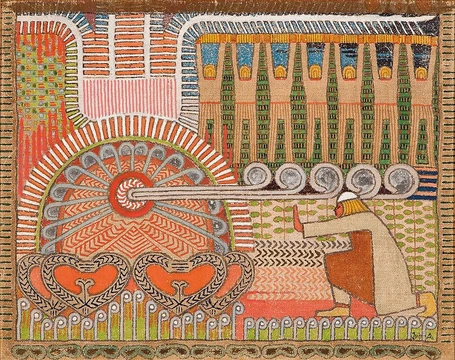
Cyrene (mythology)
Thessalian huntress and eponymous queen of Cyrene.

Wikipedia / Wikimedia Commons
Cyrene (also spelled Kyrene) was a figure in Greek mythology, a Thessalian princess and huntress. Her name, from the Ancient Greek Κυρήνη, means "sovereign queen" or "wall." She became the queen regnant of the Greek colony of Cyrene in Libya, which the god Apollo supposedly founded and named after her. This story is apocryphal; the city was actually established by settlers from Thera.
According to Pindar's ninth Pythian ode, Cyrene was the daughter of Hypseus, king of the Lapiths, and the Naiad Chlidanope. Scholia on Apollonius Rhodius adds that she had a sister named Larissa, as well as sisters Themisto, Alcaea, and Astyagyia. With Apollo, Cyrene had sons Aristaeus (god of animal husbandry, beekeeping, and cheese making) and Idmon (a famed seer). Another son, Autuchus, is also mentioned in scholia on Apollonius Rhodius. In a different account, her sons by Apollo were Nomius, Aristaeus, Authocus, and Argaeus.
Cyrene was a fierce huntress, called by Nonnus a "deer-chasing second Artemis, the girl lionkiller" and "a champion in the leafy forest with lionslaying hands." In Aristophanes' *Thesmophoriazusae*, Mnesilochus remarks he "can't see a man there at all – only Cyrene" upon seeing the poet Agathon dressed in both male and female clothing. She was a companion of Artemis, who gave her two hunting dogs; with these dogs, Cyrene won a prize at the funeral games of Pelias. Pindar describes her as loving the bronze-tipped javelin and sword over weaving or feasts, and she often gave peaceful quiet to her father's livestock. When a monstrous lion attacked her father's sheep, Cyrene wrestled and killed it. Apollo, witnessing her bravery, fell in love. After consulting the centaur Chiron, he carried her to North Africa in his golden car. Aphrodite welcomed them, and they lay together in a chamber of rich gold in Libya. Apollo founded the city Cyrene in the region of Cyrenaica, named after her. After their children were born, Apollo transformed Cyrene into a nymph so she could live long and continue hunting with Artemis.
In Callimachus and Acesander's account, while Eurypylus ruled Libya, a monstrous lion terrorized the citizens, so Apollo brought Cyrene to kill it. After she did so on the Myrtoussa (Hill of Myrtles), Apollo stood on the hill and showed her the land of Libya, of which she became queen. Another version says Cyrene had already wrestled and killed the
- born
- Thessaly (mythological)
- field
- Greek mythology
- nationality
- Thessalian (mythological)
- known_for
- Eponym of Cyrene, Libya; huntress; mother of Aristaeus and Idmon
Lore & Background
Cyrene was the daughter of Hypseus, king of the Lapiths, and the Naiad Chlidanope. She had a sister called Larissa, as well as other sisters: Themisto, Alcaea, and Astyagyia. She was a fierce huntress, called by Nonnus a 'deer-chasing second Artemis, the girl lionkiller' and 'a champion in the leafy forest with lionslaying hands'. She was a companion of the goddess Artemis, who gave her two hunting dogs, with which she won the prize in the funeral games of Pelias. When a monstrous lion attacked her father's sheep, Cyrene wrestled and killed it. Apollo, admiring her bravery, fell in love with her and, after consulting the centaur Chiron, carried her away to North Africa in his golden car. He made her ruler of the land, and Aphrodite welcomed them. Apollo founded the city Cyrene in the region of Cyrenaica, both named after his lover. By Apollo, Cyrene bore Aristaeus (god of animal husbandry, bee-keeping, and cheese making) and Idmon (a famed seer). Scholia on Apollonius Rhodius also mention a son called Autuchus. In another account, her sons were Nomius, Aristaeus, Authocus, and Argaeus. After giving birth, Apollo transformed Cyrene into a nymph so she could have a long life and continue hunting with Artemis.
Reader's Guide
Cyrene's significance lies in her role as the mythological eponym of the important Greek colony of Cyrene in Libya. The story, though apocryphal, served to connect the historical city with the heroic and divine world of Greek mythology, lending it prestige. Her narrative, particularly as recorded in Pindar's ninth Pythian ode, highlights themes of female strength and independence, as she is a huntress who rejects domestic life and is rewarded with a kingdom and a divine marriage. Her son Aristaeus is a significant culture hero associated with pastoral arts. The myth also illustrates the common Greek practice of linking colonial foundations to mythological figures, thereby legitimizing the settlement. The story of Cyrene and her son Aristaeus also appears in the context of the tragedy of Eurydice, where Cyrene advises her son on how to recover his bees after their loss.
Did You Know?
- Cyrene was a Thessalian princess and huntress who killed a monstrous lion with her bare hands.
- She was a companion of the goddess Artemis, who gave her two hunting dogs.
- By Apollo, she was the mother of Aristaeus, god of beekeeping, and Idmon, a famed seer.
- The city of Cyrene, Libya, was named after her, though it was actually founded by settlers from Thera.
Frequently Asked Questions
Who is Cyrene (mythology)?
Cyrene is a Thessalian princess and huntress from Greek mythology, identified as the daughter of Hypseus, king of the Lapiths, and the Naiad Chlidanope. She is best remembered as the mythological namesake of the colony of Cyrene in modern-day Libya.
What are Cyrene (mythology)'s powers and role?
Cyrene functions primarily as a royal huntress and a queen regnant in the mythic tradition. Apollo is said to have established the Libyan settlement and given it her name, elevating her to a founding-queen status, though this origin story is considered apocryphal since the city was actually founded by settlers from Thera.
How does Cyrene (mythology)'s story end?
Cyrene's narrative culminates in her becoming the mother of Aristaeus and Idmon, both sons fathered by Apollo. She is thereafter remembered as the sovereign of the eponymous colony, closing her arc as a queen rather than a warrior.
Why is Cyrene (mythology) important?
She is significant as one of the better-known Thessalian huntresses and as the mythic eponym behind a major Greek colonial city in North Africa. Her story also links the Lapith royal house to the broader Apollo myth-cycle through her children.
Who are Cyrene (mythology)'s family members?
Pindar's ninth Pythian ode names her parents as Hypseus and the Naiad Chlidanope, while scholia on Apollonius Rhodius add a sister called Larissa. On the other side, she is the mother of Aristaeus and Idmon, both attributed to Apollo as their father.
More in Mythological hunters 1-24
Spotted an error? Know more?
This is a living reference — every entry is fact-audited, and reader corrections feed straight into our audit queue. Suggest an edit · See this site's audit record